· Dana Whitfield
How to clean a snake hook between animals
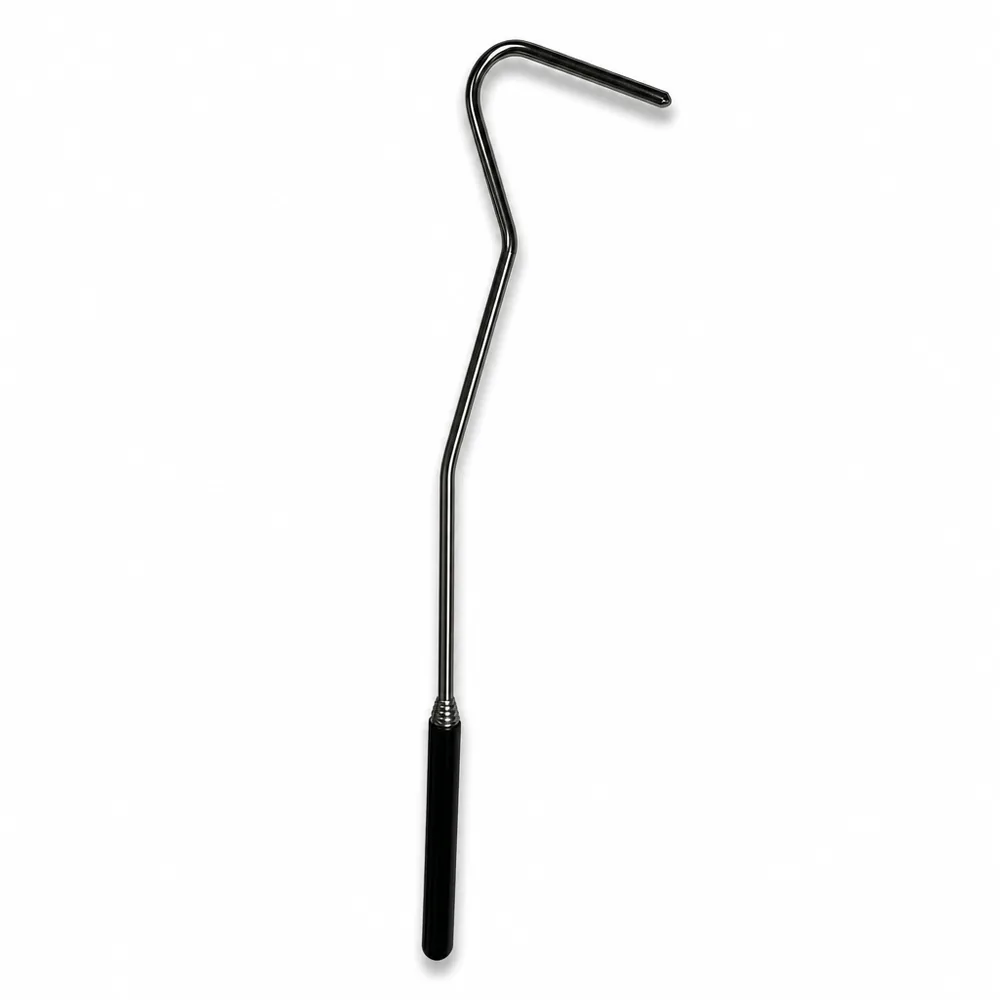
Almost every keeper builds a cleaning routine for enclosures, water bowls and hides, and almost nobody builds one for the tool that touches every animal in the room. The hook is the shared surface in a collection: first tub, second tub, fourth tub, back on top of the rack, and in April out to a road at dusk. Enclosures are separate by design. The hook is what connects them, and the routine below exists to break that connection.
What actually travels on a hook
Four things ride a shaft from one animal to the next, and they are not equally serious. The visible ones are substrate, shed skin and waste, and they matter mostly because they make the invisible ones harder to deal with. A smear of aspen and mucus dried onto stainless steel is a shelter, and anything living underneath it is protected from whatever you spray on top.
The second passenger is bacteria. Reptiles commonly carry Salmonella as part of normal gut flora, in animals that look and behave perfectly healthy, which is why the standing guidance from the Centers for Disease Control and Prevention is to wash your hands with soap and running water after handling a reptile or anything from its habitat. A hook is something from its habitat, and it ends up in your hand, then on a door handle, then on a phone.
The third is mites. Ophionyssus natricis, the snake mite, is the parasite that turns one new animal into a collection-wide problem, and it spreads exactly the way you would expect: on hands, on bedding, on cloth, and on tools moved between enclosures. A hook that goes from an infested tub straight into a clean one has done more damage in four seconds than a week of treatment will undo.
The fourth is the group of respiratory and skin pathogens that move between animals on contaminated surfaces. You will not spot those by looking, which is the whole argument for a fixed routine instead of a judgement call each time.
The three-pass routine, start to finish
Pass one is dry. Before anything wet touches the hook, take a paper towel and wipe the head and the shaft down, working from the bend toward the handle. You are removing substrate, shed and waste, and the reason this comes first is chemistry rather than tidiness: organic matter soaks up disinfectant and neutralises it before it reaches anything living underneath. Spraying a dirty hook feels productive and accomplishes very little.
Pass two is soap and warm water. Ordinary dish soap, a soft cloth or a brush, and enough attention to reach the inside of the curve where the animal's weight actually rested. Work head to handle again so you are never pushing debris back over ground you have covered. This pass is what makes the third one work, because a disinfectant can only act on a surface it can reach.
Pass three is the disinfectant, and then a rinse you do not skip. Apply it to the head and the full length of the shaft, leave it for the contact time printed on the label, rinse under running water, and dry the hook properly. Contact time is the part beginners get wrong most often: a spray that is wiped off after five seconds has not disinfected anything, it has moistened it.
| Pass | What it removes | Why it comes in this order |
|---|---|---|
| 1. Dry wipe | Substrate, shed skin, waste, dried mucus | Organic matter absorbs disinfectant before it reaches anything alive |
| 2. Soap and warm water | Films and residue the wipe left behind | A disinfectant only acts on a surface it can actually touch |
| 3. Disinfect, then rinse and dry | Bacteria and mites the first two passes missed | Contact time only counts once what is underneath is clean |
Between two healthy animals in the same rack on the same day, passes one and two are the working minimum and the whole thing takes under a minute. All three passes are for the end of a session, for anything that touched a quarantined animal, and for any hook that has been outside the house. The technique itself is covered in how to use a snake hook; this is what happens after you put it down.
The telescoping sections are the part people skip
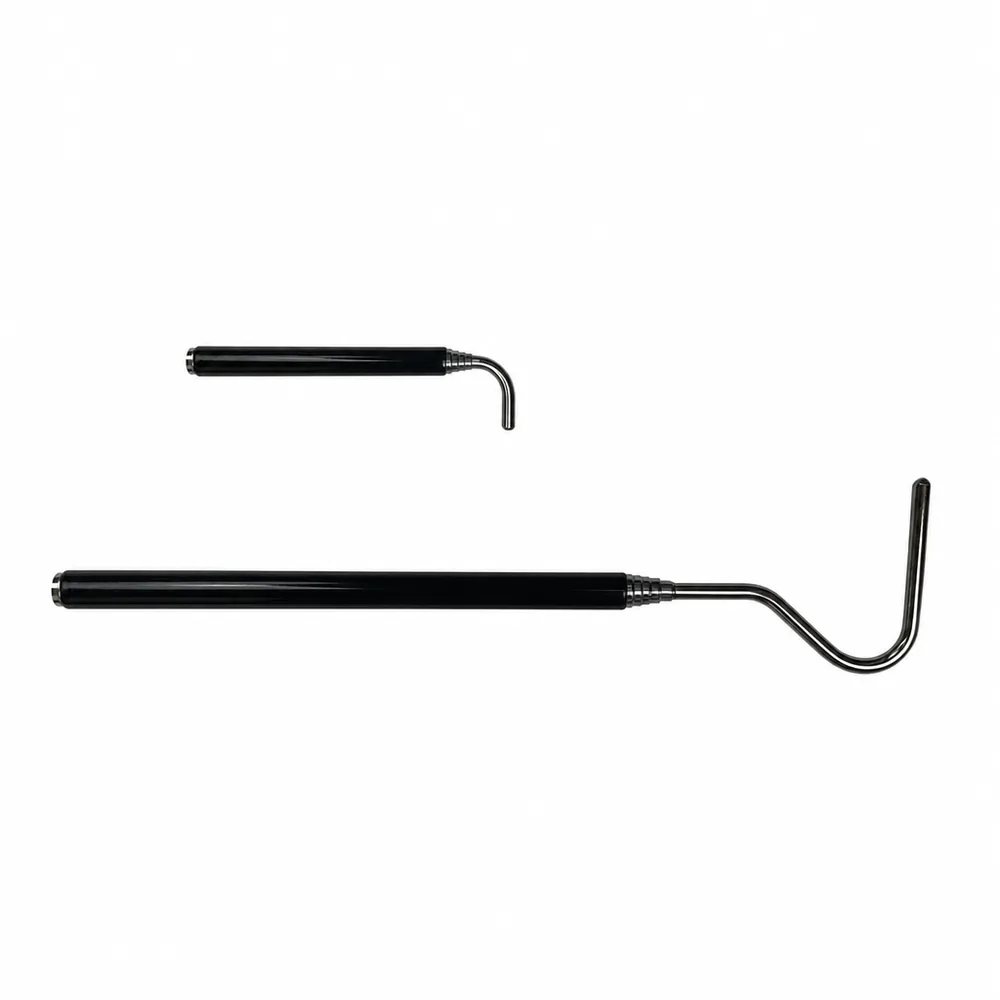
A single-piece hook is a simple object to clean. A telescopic one has more surface than it looks like it has, because each section overlaps the next and the overlap is out of sight when the hook is closed. Ours runs through six sections between 7 in (18 cm) collapsed and 26 in (66 cm) extended, and the working version of the routine is that you clean it open, not shut.
Extend it fully before pass one. Wipe and wash the whole exposed length, then collapse and extend it two or three times under running water during the rinse so anything sitting in an overlap gets flushed out rather than pushed further in. It takes about ten seconds, and it is the difference between a hook that is clean where you can see and one that is clean where it matters.
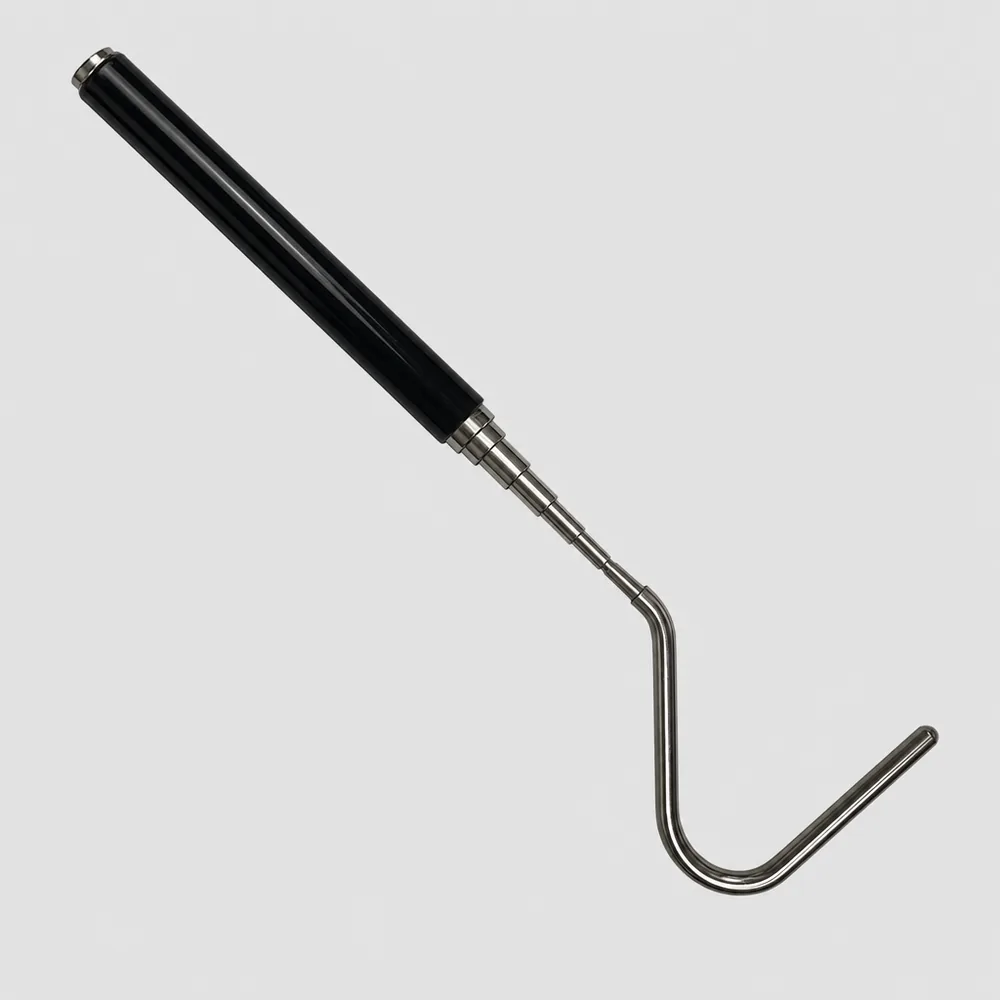
Then dry it extended. Stainless steel is the reason this routine is possible at all: it takes soap, disinfectant and repeated rinsing without pitting or absorbing anything, which is not true of a taped wooden shaft or a grip that drinks water. It is why the material gets its own line in how we test. Leave the sections open on a towel until they are dry to the touch before the hook goes back to pocket length.
Choosing a disinfectant, and the one mixing rule
Use a veterinary or reptile-specific disinfectant, or diluted household bleach, and follow the dilution and the contact time printed on the container. We are deliberately not publishing numbers here: the correct ratio belongs to the product in your hand and not to an article, and a guessed dilution is either useless or harmful. The label is the specification.
Rinse afterward, thoroughly, every time. Disinfectant residue left on a hook goes onto a snake's ventral scales and into its mouth the next time it tongue-flicks the shaft, and residue is the realistic hazard in this whole process, far more than any pathogen you were worried about. Rinse under running water until the shaft feels like metal again rather than like something that has been sprayed.
One rule that is not optional: never mix bleach with ammonia, or with any cleaner that contains ammonia, including many glass cleaners. The combination releases chloramine vapour, and it does it in the small closed room where reptile keepers tend to do their cleaning. Pick one product, use it on its own, rinse before you switch to anything else.
Do all of it away from the animals. Reptiles handle airborne irritants poorly, and a rack room with the door shut is the worst place to be spraying anything. Clean at a sink, in another room, with air moving. The same goes for the folding tongs, which have a spring, a trigger and a locking elbow, and therefore more places for debris to sit than a plain shaft does.
Quarantine, and the case for a dedicated second hook
Every new animal is a quarantine animal, whether it came from a breeder, an expo or someone in the hobby, and quarantine is only as good as the objects that cross it. A separate enclosure in a separate room means very little if the same hook works both sides of the line on the same evening.
There are two ways to handle it. The first is order of operations: work the established, healthy animals first, work the quarantine animals last, and never move backward through that sequence without the full three passes in between. That works, and it costs nothing but discipline, which is exactly the thing that fails at eleven at night on a Wednesday.
The second is a second hook that lives in the quarantine room and never leaves it. No sequencing to remember, no evening where you cut a corner, no tool crossing the line at all. At $24.95 a hook, keepers running a quarantine rack for the first time usually decide the second one pays for itself the first time a new arrival turns out to have mites. If you keep ball pythons in particular, the routine in the ball python hook training guide assumes the tool is consistent from session to session, and a dedicated quarantine hook keeps that promise on both sides of the wall.
A field hook comes home dirtier than a rack hook
Spring is when this stops being theoretical. April is the busiest month of our year by a wide margin, because it is when snakes start moving and keepers start driving back roads at dusk, and a hook that lifted a wild animal off warm asphalt is carrying whatever that population carries. Bringing it straight into a room full of captive animals is the highest-stakes transfer in the hobby.
Two cleans, then. One in the field or in the car, which is the dry wipe plus a wet wipe or sanitiser on the head and the working end of the shaft, done before the hook goes back into the bag with everything else. Then the full three passes at home, before the hook is anywhere near a rack. The field herping gear checklist makes the same point about hands and boots between sites, and this is that logic pointed the other way: what moves between wild populations on your gear also moves from a wild population into your collection.
The rule I actually follow is that the field hook and the rack hook are not the same hook. Once a tool has been out of the house it gets cleaned, then it stays in the field bag until the next trip. The same reasoning covers a hook used on a snake found somewhere it should not be, which the catching guide and the garage guide both deal with: an unknown animal in an unknown condition is a quarantine animal by definition.
Putting it away for the off-season
October through December is the quietest stretch of the keeping year. Field time drops to almost nothing, handling sessions get shorter, and gear goes into a drawer until spring. What ruins a hook over a winter is not use, it is being put away damp.
Run the full three passes at the end of the season, then leave the hook extended on a towel overnight rather than collapsing a wet shaft into itself. Store it dry, not in a sealed bag with wet boots and a damp headlamp strap. A hook put away clean in November is ready in April; one put away dirty is a job waiting for you before the first warm night.
When you pull it out again, check it before it touches an animal: extend every section, confirm each one holds by friction where you set it, and run a finger along the inside of the bend for anything rough. That is a thirty-second check and it belongs to the same habit as the cleaning routine. The sizing ladder that says which snakes this hook is built for, and where it stops, is on the snake hook page.